Loading...
Serving Lathrop, CA and surrounding areas. (209) 308-1783
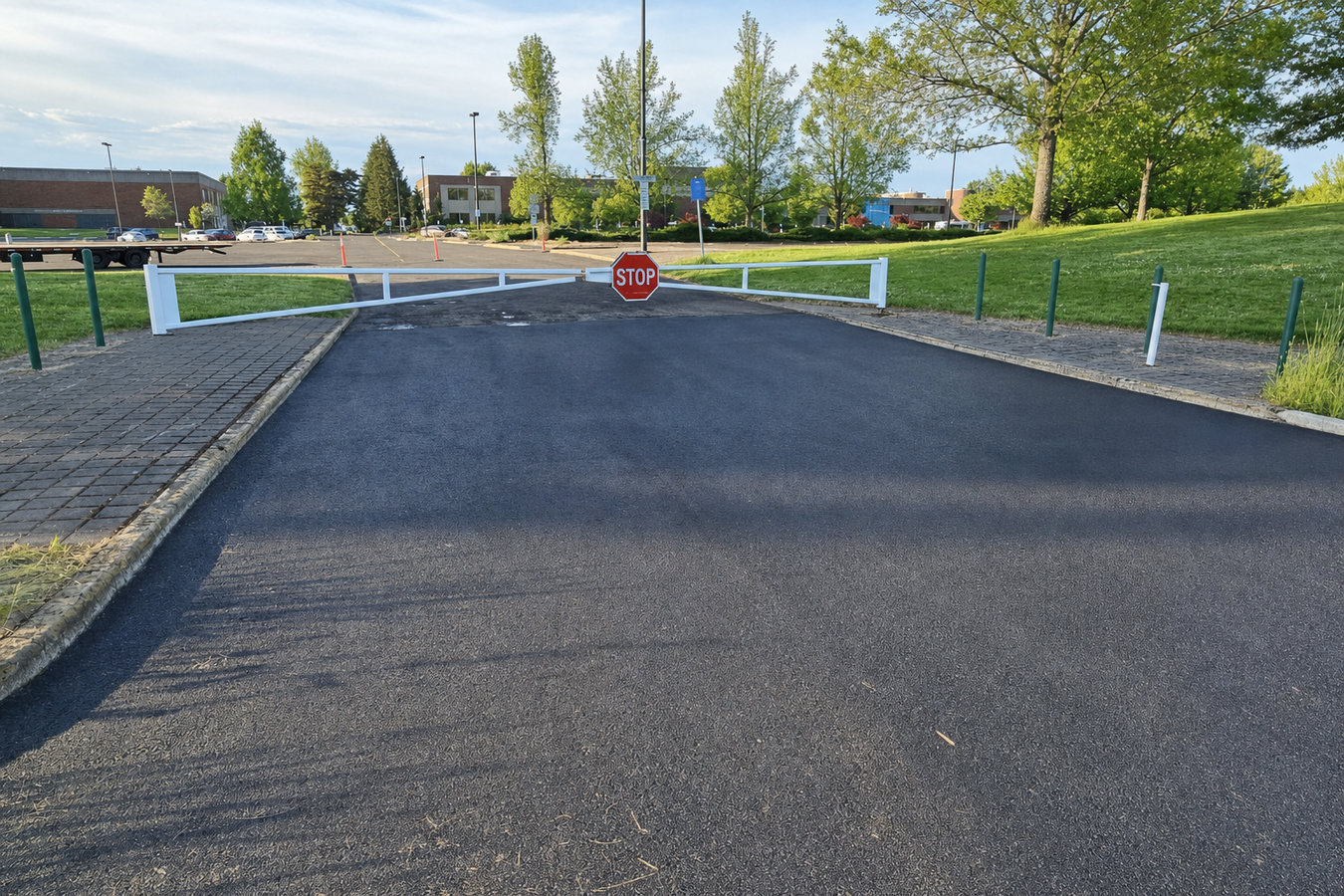
Parking lots, access roads, and loading areas built on a solid base - engineered for Central Valley heat and clay soils.
Parking lots, access roads, and loading areas built on a solid base - engineered for Central Valley heat and clay soils.
Commercial asphalt paving in Lathrop means installing a new paved surface on a business property - a parking lot, access road, or loading area - with old material removed, the ground prepared underneath, and hot asphalt mix laid in layers and compacted smooth. Most commercial lots can be paved in one to three days once the site is ready.
The base layer under the asphalt does most of the structural work. A thin or poorly compacted base is the leading reason commercial lots crack and fail early - especially in the San Joaquin Valley, where clay soils shift seasonally and heavy truck traffic tests the surface constantly. We spend as much time on the base as on the asphalt itself, because that is what determines whether your lot lasts 20 years or starts cracking in five. After paving is complete, pairing the new surface with parking lot maintenance keeps it in top condition year after year.
For businesses in Lathrop that need a well-marked, professionally finished lot from day one, we can coordinate striping and accessible space layout as part of the same project. Your parking lot is often the first thing a customer sees - and a smooth, well-marked surface signals that your property is professionally managed.
When a parking lot has cracking spread across large areas, or patches on top of patches that look like a patchwork quilt, resurfacing or full replacement becomes more cost-effective than continued repairs. At some point, the cumulative cost of patching exceeds the cost of starting fresh with a proper base.
If your lot holds puddles long after a Central Valley rain event, the surface has either settled unevenly or was never graded correctly. Standing water accelerates pavement breakdown and creates slip hazards. A new paving project with proper grading solves both problems at once.
Lathrop has seen significant commercial and industrial growth along the I-5 and Highway 120 corridors. If you are building a new facility, adding warehouse space, or converting a site, a fresh paving project is part of getting the property ready for tenants, customers, or daily operations.
Older lots may not have the right number of accessible spaces, correct dimensions, or required accessible routes to building entrances. A full repaving project is the right time to bring everything into compliance and eliminate potential liability before it becomes a problem.
We handle new commercial paving projects and full lot replacements across Lathrop and the greater San Joaquin Valley. That includes parking lots of all sizes, loading docks, drive aisles, and access roads. Every project starts with a site visit to assess drainage, soil conditions, and what the base requires - because building to the right spec for this area's clay soils is what makes a commercial lot last. For properties that need updated striping and traffic flow markings, we coordinate that alongside the paving itself. Businesses that want a complete overhaul can also combine this work with parking lot paving for a unified project plan.
For commercial properties that have a structurally sound surface but significant surface wear, our parking lot maintenance service covers crack sealing, sealcoating, and striping refresh without the cost of a full replacement. We give you an honest assessment of which approach makes sense for your situation - not every lot needs to be torn out and rebuilt. The goal is to get you the most value per dollar, whether that means a full repave or a targeted maintenance package.
For properties being developed, expanded, or converted that need a complete paved surface from the ground up.
Best for lots at the end of their useful life where widespread damage makes continued patching more costly than starting fresh.
Suited to warehouses, logistics facilities, and industrial sites that need durable surfaces under regular heavy truck traffic.
Lathrop sits at a major freight crossroads - Interstate 5, Interstate 205, and State Route 120 all converge here - and the city has a growing industrial and warehouse corridor that puts heavy truck traffic on commercial lots every day. That kind of loading demands a well-engineered base, not just a standard residential mix spec. Summer temperatures in the San Joaquin Valley regularly push past 100 degrees, which means mix design and compaction timing matter more here than in cooler climates. A contractor experienced in Central Valley conditions uses a mix formulated to stay stable in extreme heat rather than one that ruts under heavy truck traffic. Flat commercial sites in the valley also need deliberate drainage planning - without it, standing water after the wet season will accelerate pavement breakdown year after year.
The commercial growth along Lathrop's I-5 corridor has brought a steady stream of new paving projects, and we know this market well. Commercial property owners in Stockton and Tracy face the same soil and climate challenges, and we bring the same engineering approach to every project across the valley. Understanding the permit process in each jurisdiction is part of the service - we handle the applications and keep you informed so there are no surprises.
We visit your property, assess the existing surface, measure the area, and evaluate drainage and grading needs. You get a written estimate that breaks out the major cost components - no vague lump-sum quotes. We reply within one business day of your initial contact.
We identify which permits are needed and submit the applications on your behalf. Commercial permits in Lathrop can add days or a few weeks to the timeline depending on scope, so we start this process early. We keep you informed of where things stand throughout.
Old pavement is removed and hauled away. Then the base layer is graded, compacted, and built to the depth your project requires. This is the most important phase - a properly prepared base built for valley clay soils is what makes the finished surface last.
Hot asphalt mix is laid and compacted while still hot. After curing - typically 24 to 48 hours for light vehicles - striping is applied and we do a final walkthrough with you to confirm drainage, edges, and markings match the plan.
We visit your site, assess the soil and drainage conditions, and give you a written quote you can actually compare. No pressure. Reply within one business day.
(209) 308-1783The clay-heavy soils in the San Joaquin Valley expand and contract with every wet and dry season. We build the base depth and compaction to handle that movement, because a surface that fails in five years costs far more than doing it right the first time.
Central Valley summers push well past 100 degrees. We use mix designs formulated for extreme heat so your surface stays firm and stable under heavy truck traffic rather than softening, rutting, or tracking in the first hot season.
California requires contractors to hold a state-issued license - verify any contractor's standing through the California Contractors State License Board. We carry full general liability and workers' compensation coverage on every commercial project.
Accessible spaces, routes, and grading for proper drainage are planned into every project from the start - not added as afterthoughts. The ADA requirements are clear, and we make sure your finished lot meets them so you are not exposed to liability or costly retrofits later.
Commercial paving in the Central Valley is not a one-size-fits-all job. The combination of heat, clay soils, and heavy traffic demands a contractor who knows this environment. That is why Lathrop property owners call us first.
Ongoing crack sealing, sealcoating, and striping refresh that extends the life of a commercial surface without the cost of full replacement.
Learn MoreNew asphalt surfaces for retail, office, and mixed-use parking lots of any size in Lathrop and the surrounding valley.
Learn MoreContact us today to lock in your preferred paving window before Central Valley heat arrives and scheduling backs up.