
Loading...
Serving Lathrop, CA and surrounding areas. (209) 308-1783
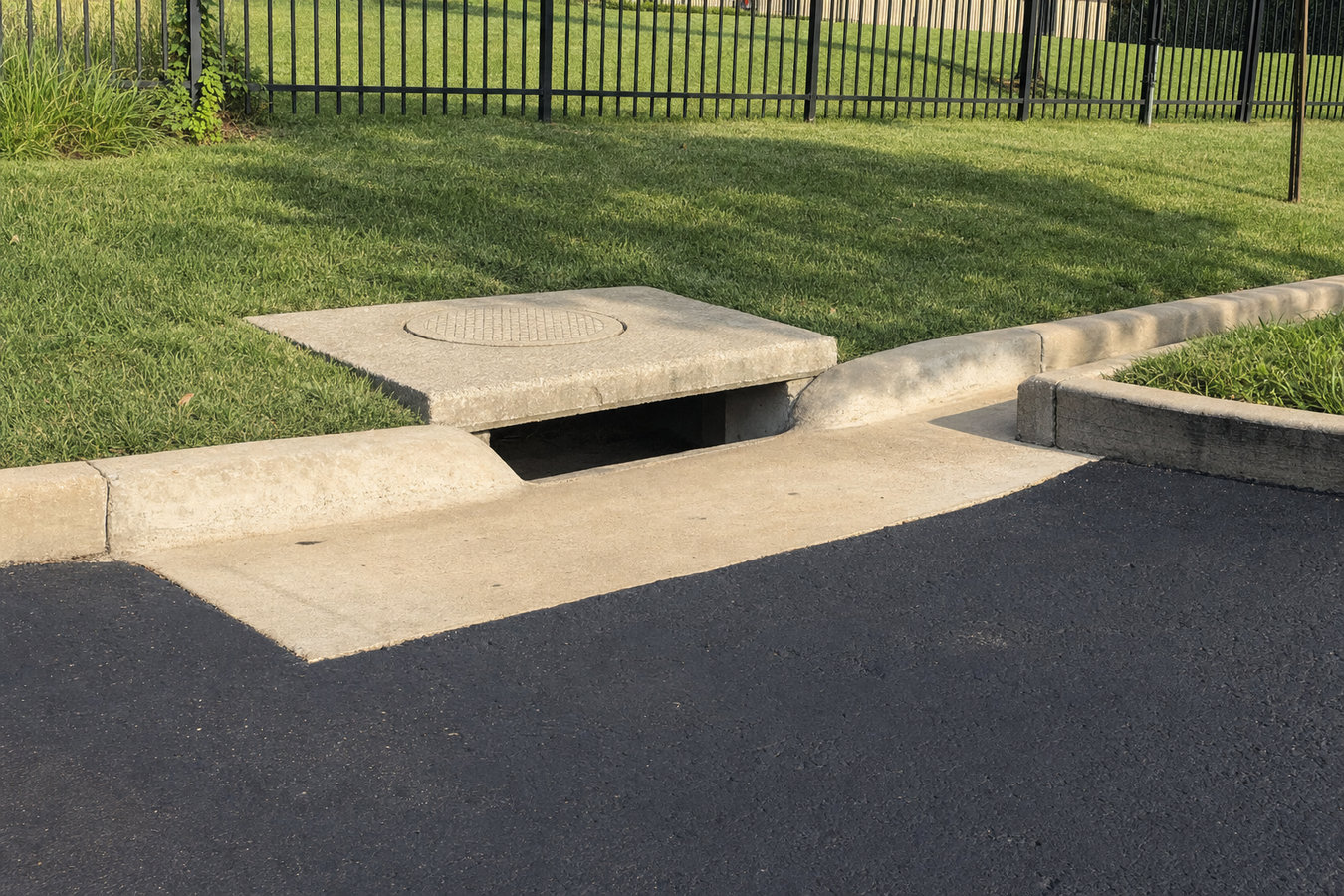
Standing water on your driveway or near your foundation causes damage that compounds every rainy season. We fix the grade and install the right drainage system so water moves away from your home, not toward it.
Drainage solutions in Lathrop mean more than just adding a drain - they correct the grade, install the right system, and make sure water has a clear path away from your pavement and home. Most residential projects are completed in one to three days, depending on how much excavation or pipe work is needed.
Lathrop sits on flat terrain with clay-heavy soils that expand when wet and shrink when dry. That combination means water does not shed naturally, and when it pools repeatedly, it softens the base under your pavement. If you have noticed cracks that keep coming back, a surface regrading combined with asphalt repair often solves both problems at once.
Every Central Valley rainy season that passes without proper drainage is another round of water working its way into your pavement. If you see standing water after rain or soft spots in your asphalt, the sooner you call, the less damage there is to fix.
If standing water takes hours or days to disappear after a Central Valley rain event, your surface is not shedding water the way it should. That pooling works its way into your pavement and the soil beneath it every time it happens, accelerating base failure.
If part of your driveway feels spongy or has visibly dropped lower than the surrounding surface, water has likely been saturating the base material underneath. In Lathrop's clay soils, this kind of water-driven settling can progress quickly once it starts.
If you have had cracks filled and they reopen within a season or two, the underlying cause is often water undermining the base. Patching the surface without fixing the drainage is like treating the symptom while the cause keeps growing.
If rain or irrigation water flows toward your home rather than away from it, your driveway grade is working against you. Water near a foundation or garage slab can cause far more expensive damage than a driveway repair - and it needs to be addressed quickly.
We assess how water currently moves across your paved surface and design a system that sends it to a safe, defined endpoint. That might mean regrading the asphalt surface, cutting in channel drains or catch basins, adding underground pipe runs, or reshaping the edges so water sheds cleanly. For properties that have been neglected, pairing drainage work with grading and excavation corrects the underlying grade before the new drainage system is installed.
For properties with an existing pavement surface that has failed because of water intrusion, additional traffic management features like speed bumps may also be part of a broader pavement improvement plan. We give you a written scope that covers exactly where the water will go when the system is done - not just a vague promise to fix the problem.
Best for driveways where the slope has flattened or reversed due to settling, directing water back toward the street.
Ideal for driveways with a low point that collects water - a trench drain captures runoff at the problem spot.
Suited to parking areas or flat lots where water pools in the middle and needs a central collection point with underground discharge.
For properties where the drain outlet is far from the collection point, piping carries water away to a safe endpoint without disrupting the surface.
Lathrop sits on remarkably flat Central Valley terrain, which means water does not naturally drain away quickly on its own. The clay-heavy soils beneath most properties in the area swell when wet and shrink when dry - and that seasonal movement shifts the ground under your pavement. Every time water is allowed to saturate those clay layers, it accelerates the cracking and settling that shortens the life of your asphalt. Lathrop's wet season arrives fast and concentrates months of rainfall into a short window, making a properly engineered drainage system essential rather than optional. Homeowners in Manteca and Stockton face the same clay-soil and flat-terrain conditions, and we bring that same regional expertise to every project.
Lathrop has also grown rapidly, with new subdivisions and developments reshaping local grading patterns. Neighboring construction, new roads, and changed landscaping can redirect water onto your property in ways that were not anticipated when your driveway was first paved. If you have noticed new pooling that was not there a few years ago, a shift in the surrounding grade is often the reason - and a drainage correction that accounts for those changes is the right fix. The California Stormwater Quality Association provides guidance on best practices for managing runoff in developed areas like the San Joaquin Valley.
Tell us what you are seeing - pooling water, soft spots, or water near your garage. We respond within one business day and schedule a time to look at the property in person.
We walk your driveway and surrounding area, check the slope, trace where water goes, and explain what we find in plain terms. You get a written estimate covering the recommended solution, materials, and timeline - no cost for the assessment.
If the project involves connecting to a public storm drain, curb, or gutter, we handle the permit application for you. This can add a week or two to the start date, but we manage it and keep you informed throughout.
On work day, the crew installs the drainage system and patches any asphalt that was cut or removed. Before we leave, we walk the finished work with you and show you exactly where the water will now flow.
Every driveway drains differently. We walk your property, show you exactly what is happening, and give you a written quote at no cost. No pressure, no obligation.
(209) 308-1783Every drainage estimate we provide includes a clear, written explanation of where the water will flow when the system is done. A contractor who cannot answer that question clearly has not thought the job through - we make that accountability a standard part of every proposal.
Lathrop's expansive clay soils behave differently than sandy or loamy ground - they move with the seasons and they affect drainage system design. We have worked across the northern San Joaquin Valley and design every system to account for that seasonal soil movement, not just the surface water problem.
California requires paving contractors to hold a current state license before doing this kind of work. You can verify our license status through the California Contractors State License Board at cslb.ca.gov before you sign anything. We encourage you to check.
If your project requires connecting to a public curb, gutter, or storm drain, we handle the permit process with the city or public works authority for you. That protects you from work being ordered undone - and it signals we know local requirements, not just how to run a drain.
We have built a reputation in Lathrop for drainage work that actually solves the problem - not just for the season, but for years. If you want a contractor who will show their work and stand behind it, call us and let us walk your property. Verify our license at cslb.ca.gov before you commit to any contractor.
Add asphalt speed bumps to control traffic flow on your Lathrop driveway or private road.
Learn MoreCorrect the underlying grade of your property before installing a new drainage system or paved surface.
Learn MoreThe Central Valley wet season arrives fast - call now to schedule your free assessment and lock in your project date before the rain returns.